East Asia Blog Series

How a Catchment Approach Can Help Manage Plastic Pollution

Xueliang Cai, Lijun Zhou 6 Jul 2026
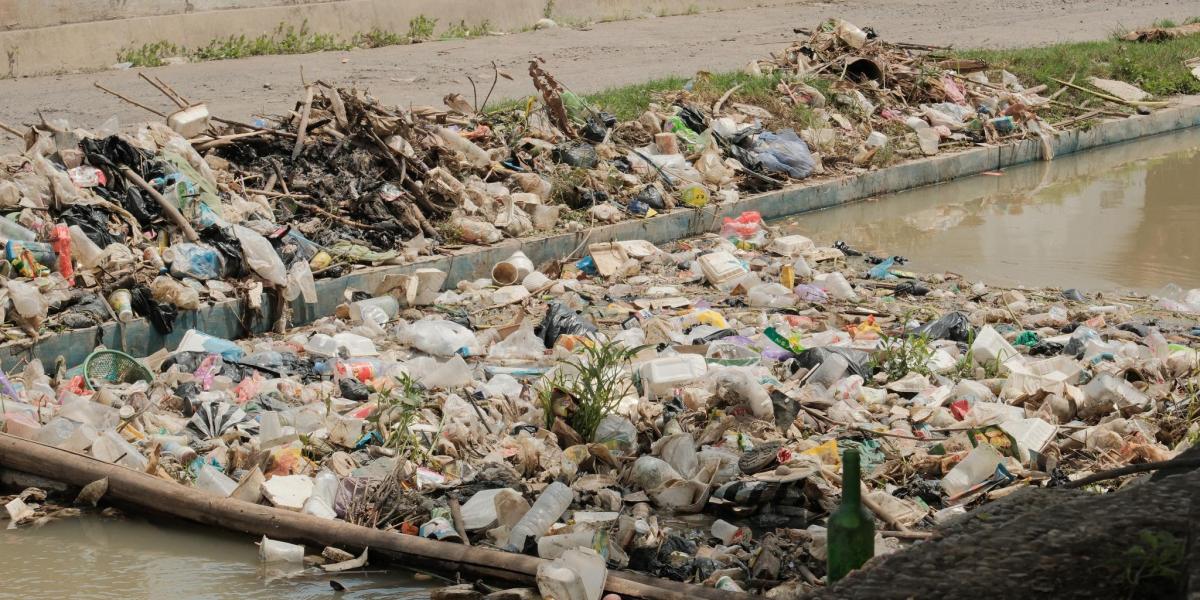
Plastic pollution originates from multiple sources, but because these are connected through the hydrological system, they cannot be managed effectively in isolation. Photo credit: ADB.

Understanding how plastics move through river basins helps governments identify pollution hotspots and prioritize interventions.

Introduction

Plastic pollution is often viewed as a marine problem, but much of it originates inland. Plastics discarded in cities, farms, roads, and communities are carried by rainfall, runoff, drainage systems, and rivers before eventually reaching coastal waters.

Addressing plastic pollution therefore requires more than improving waste collection or cleaning up beaches. Governments also need to understand where plastics originate, how they move through the landscape, and where interventions can most effectively prevent them from entering waterways.

The Mulan River Basin in Fujian Province, People’s Republic of China (PRC), offers one example of how a catchment approach can support these decisions. As part of an Asian Development Bank (ADB)-supported pilot activity, researchers combined field surveys and hydrological modeling to map plastic pollution across the basin. The findings informed environmental planning, infrastructure investments, and policy measures to reduce plastic leakage into rivers and coastal waters.

This piece is adapted from A Catchment Approach to Plastic Pollution Management: The Case of the Mulan River, People’s Republic of China published by ADB.

Why the Catchment Approach Matters

Around 80% of plastic pollution reaching the world’s oceans is transported through rivers and coastlines. Along the way, plastics are carried by runoff, drainage systems, waterways, and wind. Larger plastic items gradually break down into microplastics, making them increasingly difficult to remove and increasing their potential impacts on ecosystems and human health.

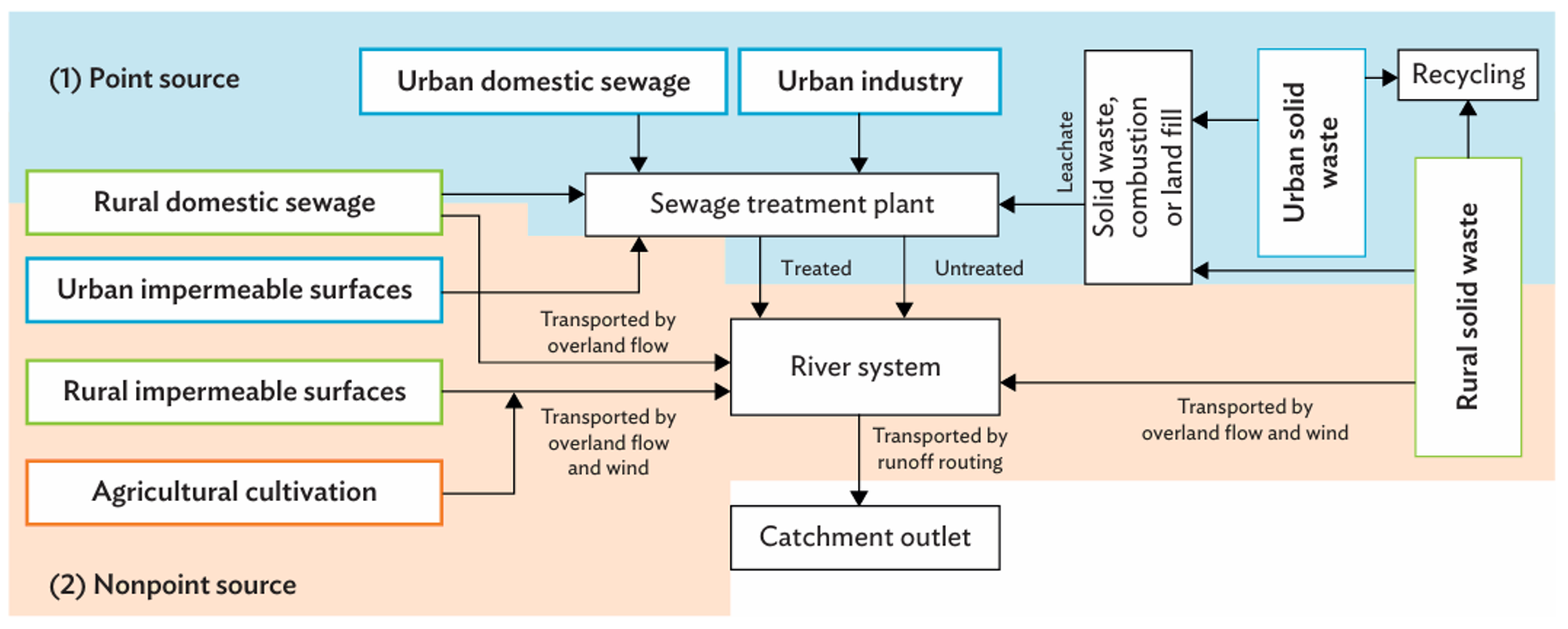
Plastic pollution originates from multiple sources (including household waste, agricultural plastic films, road runoff, and wastewater) that are often managed separately. A catchment approach recognizes that they are connected through the hydrological system.

Rather than addressing individual pollution sources in isolation, the approach examines how plastics are generated, transported, and accumulated across an entire watershed. This helps governments identify pollution hotspots, distinguish between point and nonpoint sources, and determine where interventions are likely to have the greatest impact before plastics reach rivers and the ocean.

Applying the Catchment Approach in the Mulan River Basin
Source: ADB.

The Mulan River stretches approximately 105 kilometers and drains a watershed of about 1,732 square kilometers before flowing into Xinghua Bay. The basin supports approximately 1.18 million people and includes forests, croplands, urban centers, and rural communities. Rapid urbanization, agricultural expansion, and increasing plastic consumption have placed growing pressure on wastewater systems, solid waste management, and the surrounding environment.

To better understand how plastic pollution moves through the basin, the pilot activity developed and applied a multisource plastic yield and transport model. The study integrated hydrological processes, land use, climatic conditions, economic activity, and field observations to estimate how plastics are generated and transported from different sources.

Researchers analyzed plastics originating from urban and rural solid waste, agricultural plastic films, roads and other impermeable surfaces, and domestic wastewater. By combining hydrological modeling with field observations, they estimated pollution loads, identified major contributors, and mapped how plastics travel through the watershed before eventually reaching the sea.

This basin-wide perspective made it possible to understand not only where plastics were generated, but also how they moved through interconnected landscapes and waterways.

Key Findings from the Mulan River Study

The study estimated that approximately 313 tons of plastic are generated annually within the Mulan River Basin. Of this amount, about 35.5 tons enter the river system each year, while an estimated 23.1 tons ultimately reach the ocean through the river network and its tributaries.

The analysis also identified the relative contribution of different pollution sources.

  • Solid waste accounted for 37.8% of plastic pollution entering the river system, making it the largest contributor.
  • Agricultural plastic film contributed 26.4%, highlighting the importance of addressing agricultural practices alongside urban waste management.
  • Roads and other impermeable surfaces contributed 21.5%, primarily through runoff.
  • Urban and rural wastewater accounted for 13.4%, mainly through sewage-related microplastics.

The model demonstrated strong agreement with observed monitoring data, providing confidence in the estimated pollution loads and transport pathways. Together, these findings provided the first comprehensive assessment of plastic pollution sources and movement within the Mulan River Basin.

Informing Policy and Investment

In the Mulan River Basin, the study informed the design of a broader environmental improvement program backed by a $548.6 million investment. The program includes expanding wastewater collection networks and treatment facilities, strengthening solid waste collection, sorting, recycling, and disposal systems, promoting improved management of agricultural plastic films, establishing a local plastics and textiles recycling facility, developing the One Mulan Smart Environmental Management Platform, and supporting community education and county-level policy development.

By 2028, the program aims to provide solid waste services to at least 80 villages, extend wastewater treatment to more than 61,000 households, reduce suspended solids entering the river by at least 10%, strengthen technical capacity through training, and expand environmental education for students and local communities.

Rather than relying on assumptions about where plastic pollution occurs, the study enabled local authorities to prioritize investments based on evidence and better coordinate actions across sectors.

Lessons for Other Governments

The Mulan River experience demonstrates that plastic pollution can be addressed long before it reaches the ocean. Understanding how plastics move across an entire watershed enables governments to identify priority sources, target interventions, and integrate plastic pollution into broader river basin management.

The experience also highlights the value of combining field observations with modeling. Better data allows governments to identify pollution hotspots, evaluate transport pathways, and direct limited resources where they can have the greatest impact.

Plastic pollution is not solely a waste management issue. Effective management requires coordinated action across wastewater management, agriculture, transportation, environmental monitoring, and community engagement. A catchment approach provides a practical framework for bringing these sectors together while recognizing the interconnected nature of river systems.


Resources
Picture of Xueliang Cai

Xueliang Cai

Senior Water Resources Specialist, SD2, Asian Development Bank

Picture of  Lijun Zhou Milliken

Lijun Zhou Milliken

Natural Resources and Agriculture Specialist, SD2, Asian Development Bank

Reproduced from Development Asia.

Is this piece helpful?
YesNo

© 2026 Regional Knowledge Sharing Initiative. The views expressed on this website are those of the authors and presenters and do not necessarily reflect the views and policies of the Asian Development Bank (ADB), its Board of Governors, or the governments they represent. ADB does not guarantee the accuracy of the data in any documents and materials posted on this website and accepts no responsibility for any consequence of their use. By making any designation of or reference to a particular territory or geographic area, or by using the term “country” in any documents posted on this website, ADB does not intend to make any judgments as to the legal or other status of any territory or area.