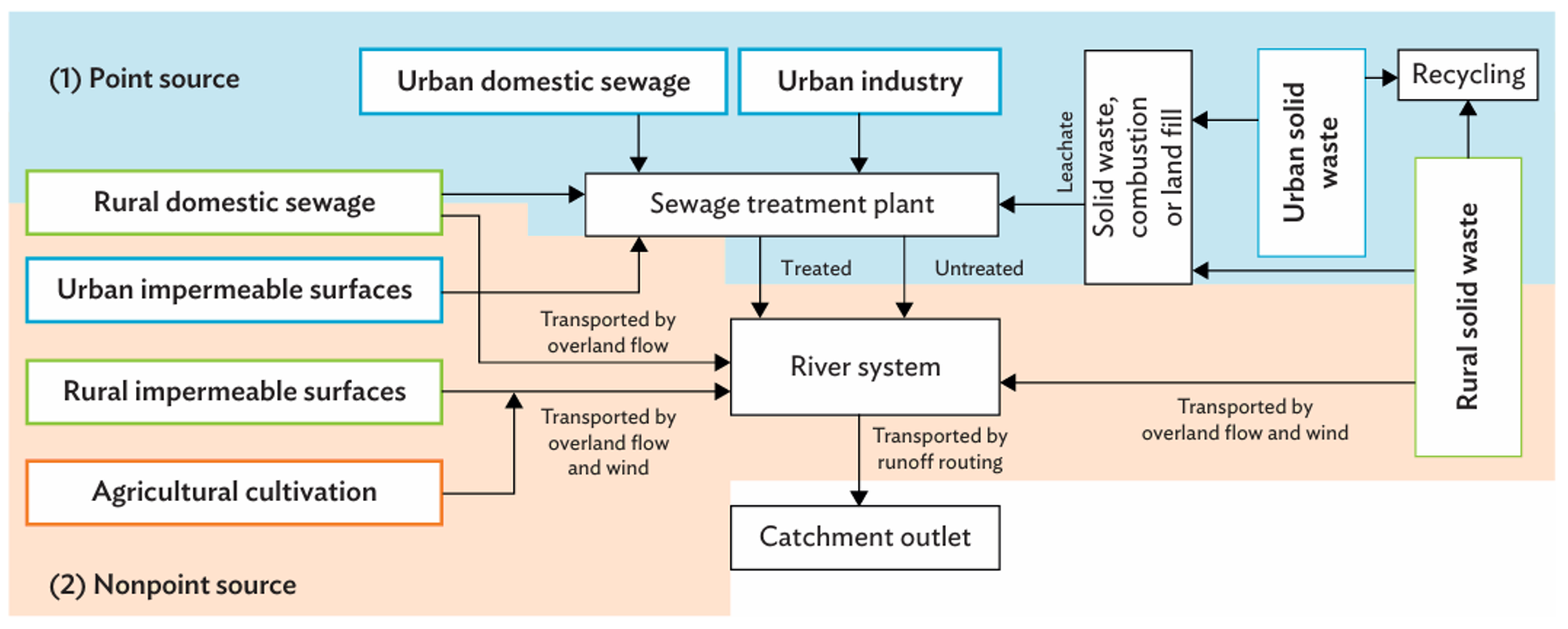
The Mulan River experience demonstrates that plastic pollution can be addressed long before it reaches the ocean. Understanding how plastics move across an entire watershed enables governments to identify priority sources, target interventions, and integrate plastic pollution into broader river basin management.
The experience also highlights the value of combining field observations with modeling. Better data allows governments to identify pollution hotspots, evaluate transport pathways, and direct limited resources where they can have the greatest impact.
Plastic pollution is not solely a waste management issue. Effective management requires coordinated action across wastewater management, agriculture, transportation, environmental monitoring, and community engagement. A catchment approach provides a practical framework for bringing these sectors together while recognizing the interconnected nature of river systems.