
East Asia Blog Series
Your Questions Answered: Extreme Heat in Asia and the Pacific
Kathryn Milliken 1 Jul 2026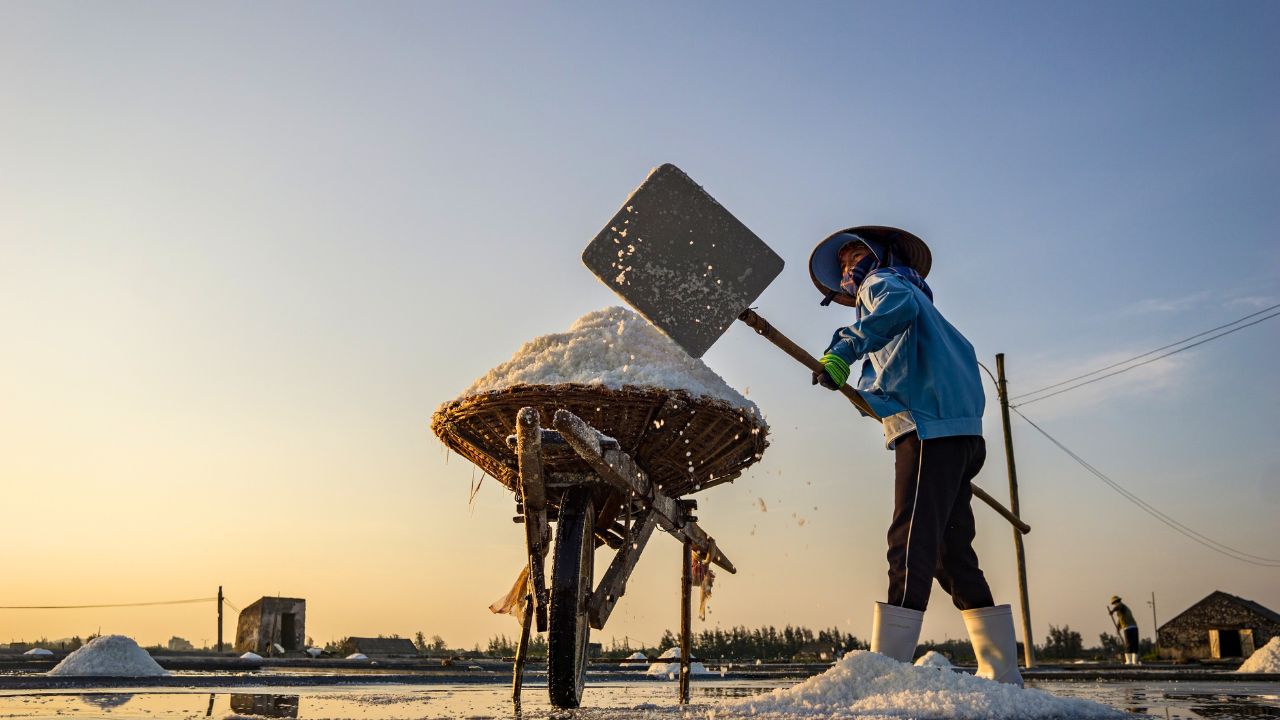
Kathryn Milliken, a senior climate change specialist at ADB, is one of the authors of Extreme Heat: The Emerging Science and Its Implications for Asia and the Pacific, which brings together research on heat risks, their economic and social consequences, and how governments and investors can better prepare.
Across Asia and the Pacific, heatwaves are breaking records, disrupting harvests, forcing school closures, and pushing workers and communities to their limits. The people hit hardest are those with the least protection—and as temperatures keep rising, the gap between those who can adapt and those who cannot is widening fast.
What is extreme heat, and why does it matter?
Most of us think of heat as simply a high temperature reading. But extreme heat is more than that—and it does not even have to set records to cause serious harm. It refers to periods when the atmosphere holds unusually large amounts of heat energy, either as high temperature, high humidity, or both. That distinction is critical. In dry conditions, sweat evaporates quickly and cools the body. In humid conditions, the body’s ability to cool itself is impaired. That’s why a sticky 33°C afternoon in Manila or Dhaka—where high humidity can push the heat index, or “feels like” temperature, well above 45°C—can be more dangerous than a far hotter but drier day.
Scientists measure this combined stress using the wet-bulb globe temperature, which factors in air temperature, humidity, sunlight, and wind speed—essentially what the body feels, not just what the thermometer reads.
This matters because the numbers are already alarming—and many of the impacts come not from spectacular record-breaking days, but from the relentless accumulation of ordinary hot ones. Extreme heat does not affect everyone equally: risks vary by age, sex, pregnancy, disability, occupation, housing, and access to water, cooling, and health care. In 2020, three-quarters of the workforce in Asia and the Pacific were exposed to excessive heat, contributing to an estimated 10.5 million work-related injuries and illnesses.
In April 2024, nationwide school closures in Bangladesh, Cambodia, and the Philippines disrupted the education of more than 63 million children—such losses fall disproportionately on girls, whose schooling is more likely to be cut short permanently, and pile additional care burdens onto women at home. By 2030, the physical capacity for outdoor work in some parts of Asia is projected to fall by more than half from current levels. And many parts of the region are expected to see more than 40 days a year above 35°C—conditions that approach the limits of what the human body can cope with.
What happens to the human body in extreme heat?
The body works hard to stay cool. When it can’t, the consequences escalate quickly. Heat exhaustion sets in when the body struggles to keep blood flowing to provide oxygen and energy to working muscles and at the same time to the skin where it can cool—causing dizziness, nausea, cramps, and a rising core body temperature above 38°C. Left untreated, this can become heatstroke—a life-threatening emergency where the core temperature reaches 40°C or higher, the brain starts to malfunction, and organs can fail.
The most extreme scenario is uncompensable heat: conditions so severe that the body generates more heat from normal activity than it can lose to the surrounding air. Core body temperature rises uncontrollably. No amount of shade, water, or rest can stop it. This is the hard physiological limit of human survival. Uncompensable heat has been recorded in parts of eastern Pakistan, northern India and Bangladesh, and eastern areas of the People’s Republic of China (PRC). Even with average global temperatures rising less than 1.5°C, most of Asia and the Pacific will experience such events.
One finding that surprises most people: 91% of the dangerous heat exposures that injure and kill workers happen on ordinary hot days—not during declared heatwaves. Women are among the most exposed: pregnancy lowers the body’s tolerance for heat, women make up a large share of informal outdoor and agricultural labor, and those managing unpaid care work at home often do so in poorly ventilated spaces with no access to cooling or rest. There is also a less-visible compounding effect: the same weather conditions that generate extreme heat—high atmospheric pressure, low wind speeds, intense sunlight—also trap air pollution and wildfire smoke near the ground, amplifying health risks beyond what either heat or poor air quality would cause alone.
Repeated exposure to heat causes cumulative harm. Agricultural workers across South and Southeast Asia are developing chronic kidney disease not from a single crisis, but from the build-up of small daily injuries to kidney tissue. Chronic heat exposure has also been found to accelerate biological aging at the DNA level, altering how genes behave in ways that outlast the heat event itself.
What does extreme heat do to our food?
Every step involved in getting food from farms to the table is exposed to extreme heat—and so is the water that sustains it all. Women and girls are at the center of this: as farmers, livestock keepers, fish processors, market vendors, and the household members who manage food, water, and nutrition.
In the field, high temperatures disrupt the flowering process, damage plant cells, and dry out soil faster than it can recover. India’s six worst food grain harvests all coincided with unusually hot and dry monsoon seasons. For smallholder farmers across Southeast Asia growing coffee, coconut, and cashews, even modest temperature increases translate into measurable yield and quality losses. A study of coffee farms across Southeast Asia found that every 1°C rise above a certain threshold reduced yields by around 8%.
Livestock is equally vulnerable. Heat stress reduces weight gain, fertility, milk production, and disease resistance—hitting the smallholder farmers who raise most of Asia’s cattle, buffalo, and poultry particularly hard.
In the water, the picture is just as concerning. Warmer water holds less dissolved oxygen, stunting the growth of farmed shrimp and fish and increasing susceptibility to disease and harmful algal blooms that can make seafood unsafe to eat. Marine heatwaves are already causing mass die-offs in the Pacific: a single event in early 2023 left hundreds of dead fish, sea snakes, octopuses, and crabs washing ashore in Fiji, Kiribati, and Vanuatu.
The systemic risk—what researchers call simultaneous breadbasket failure—is perhaps the most sobering finding. The probability of maize crops failing at the same time in Argentina, Brazil, India, the PRC, and the United States—the world’s five major growing regions—rises from 6% today to 54% at just 2°C of warming. When multiple breadbaskets fail together, international trade cannot compensate. Prices spike—and women and girls who most often absorb the shock, cutting their own consumption first, taking on more water and food collection, and facing rising pressure on household budgets.
What are the biggest impacts in terms of economy, industries, and livelihoods?
The clearest and most immediate impact is on labor. When it is too hot to work safely outdoors, less gets done—and the region’s economies are uniquely exposed. Small and medium-sized developing countries in Southeast Asia are projected to suffer labor productivity losses 1.5 times the global average, because they depend so heavily on agriculture, construction, and manufacturing done outdoors.
Women in informal, agricultural, domestic, and market work face some of the highest heat exposure with the least access to workplace protection, cooling, or social safety nets—and as household incomes fall, unpaid care responsibilities, which fall disproportionately on women and girls, tend to increase. The countries projected to be worst affected before 2030 include India, Bangladesh, Thailand, Myanmar, Cambodia, and Lao PDR.
But the economic damage goes beyond individual workers. Supply chains are disrupted. The PRC, for instance, is projected to face indirect losses of 0.5% of GDP from manufacturing supply chain disruptions caused by heat stress in supplier countries by mid-century. The effects ripple outward—reducing demand, driving up costs, and slowing growth.
The El Niño-Southern Oscillation—the Pacific climate pattern that periodically drives extreme heat and drought across the region—already shows what sustained economic disruption from heat looks like. Research published in Science attributed $4.1 trillion in global income losses to the 1982–83 El Niño event, and $5.7 trillion to the 1997–98 event. Crucially, these losses are persistent—economies don’t snap back once the weather returns to normal. The damage compounds over time, just as in the human body.
The uncomfortable reality is that the systems we rely on—building codes, labor laws, infrastructure design standards, crop insurance—were designed for a climate that no longer exists. We are not adapted to the heat we have now, let alone the heat that is coming.
How Is Asia and the Pacific especially vulnerable to extreme heat?
No other region carries greater exposure to extreme heat, and the vulnerability runs through almost every layer of its development—from its geography and cities to its crops, farming calendars, and the workers who tend them.
Geography puts the region at the front line. The tropical and subtropical coastal cities of South and Southeast Asia—home to hundreds of millions of people—are precisely the areas where humid heat is projected to intensify most. Under 1.5°C of warming, for example, the climate of Shanghai could come to resemble today’s Karachi.
Urban growth increases the risk. Cities already run 2°C to 8°C hotter than the surrounding countryside because of the urban heat island effect—the concentration of concrete, asphalt, and buildings that trap heat and limit the overnight cooling our bodies need to reset. An estimated 1.6 billion people in the region live in informal urban settlements, in homes built from materials that trap heat—tin, plastic, and plywood—often without reliable electricity, clean water, or access to cooling.
The burden falls hardest on those with the fewest options: the elderly, young children, the homeless, and pregnant women. Women also make up a large share of informal and outdoor workers, often without access to cooling, shade, or occupational protection yet research shows that women’s organizations, community networks, and women workers themselves are often the most effective in designing and implementing local responses to heat.
The region is also the world’s most disaster-prone—which matters because extreme heat rarely arrives alone. In mountain regions, glaciers that feed major river systems are melting faster, disrupting water supplies and increasing flood risk downstream. Coral reefs, which protect coastlines and support the fisheries that hundreds of millions depend on, are bleaching under warming seas. And tropical cyclones can trigger catastrophic compound events when the heat that follows a storm hits populations whose power has been knocked out.
There is also a troubling gap in the science itself. Climate models have been found to underestimate observed warming trends in Japan, the Republic of Korea, Indonesia, and parts of the PRC. Heat projections for some of the most populated parts of the region may already be too conservative. The risk is higher than the numbers suggest.
How are ‘compound hazards’ changing the way we think about heat and disasters?
Compound hazards can exacerbate extreme heat events, an area that doesn’t get enough attention. We looked at how these events can interact with other hazards on two fronts: the timing—when extreme heat occurs with another hazard, either before or after—and the location, where extreme heat in one place coincides with another hazard somewhere else.
Moreover, the atmospheric conditions that generate extreme heat—high pressure, stagnant air, intense sunshine—are the same ones that trap air pollution and smoke from wildfires near the ground, multiplying health risks.
One example brings this risk to life. After Hurricane Katrina’s deadly impact on New Orleans in 2005, millions evacuated ahead of its approach. More people died of heat-related illness during the resulting gridlock than from the storm itself. In Asia and the Pacific, the more common danger runs in the other direction: a cyclone makes landfall, knocks out power across a region, and a heatwave then strikes a population with no air conditioning and no way to cool down.
Extreme heat is no longer a distant risk to be modeled and monitored— it is already reshaping lives and livelihoods across the region. Decisions made today on buildings, labor protection, early warnings, and food systems will decide how many people are left exposed to a heat our world has never seen before.
This post was written with assistance from Professor Rob Wilby , Loughborough University and draws on analysis by Zonibel Woods, Senior Social Development Specialist (Gender and Development).

Kathryn Milliken
Senior Climate Change Specialist, ADB Climate Change and Sustainable Development Department
Reproduced from adb.org.