

The PRC’s Role in the Regional Flyway Initiative

Millions of migratory birds rely on the diverse landscapes of the People’s Republic of China (PRC) as they journey along the East Asian–Australasian Flyway. As part of the Regional Flyway Initiative (RFI), the PRC Government and ADB are working together to restore critical ecosystems and support long‑term ecological balance.

Transcript

Migratory birds, travelers in the sky. There are over 800 species of migratory birds in the People’s Republic of China, including more than 280 species of waterbirds and over 510 species of land birds.

They are a fundamental part of the web of life and are essential to maintaining ecological balance. Wetlands, forests, grasslands, and deserts are the homes they rely on for survival.

Each year, tens of millions of migratory birds journey across mountains, rivers, and oceans. A grand migration etched into nature’s rhythm. The PRC is one of the countries with the highest diversity of birds in the world, with vast terrain, complex topography, and varied climates. The PRC supports some of the richest natural environments in the world for birds.

The PRC sits at the intersection of four of the world’s nine major flyways. And with these important values comes a responsibility to protect birds and their habitats. Yet these breathtaking journeys grow ever more perilous. More extreme weather events and continuous human development are encroaching on bird habitats, leaving some of them under threat.

Global warming and the frequent occurrence of extreme weather have reduced the suitable habitat area for birds such as the Siberian Crane, leading to frequent food shortages. Consequently, large numbers of birds have moved to agricultural fields to search for food, which has triggered human-bird conflicts.

Habitats along all flyways continue to be lost or degraded from clearance, pollution, climate change and invasive alien species. Combined with the limited capacity for resource monitoring, the protection and restoration of migratory birds’ habitats are extremely urgent.

To protect biodiversity, it is important to foster harmony between humans and birds. Protect nature, positive governance, and practical conservation measures. Over 2000 protected areas have been established in the PRC, which partly cover some of the habitats used by migratory birds. Migratory bird sanctuaries along the coast of the Yellow Sea-Bohai Gulf of PRC have been inscribed on the World Heritage List.

The PRC officially launched an action Plan for the Protection and Restoration of Migratory Birds Flyways 2024 to 2030. Accelerating actions for a connected Conservation Framework. Restoring critical ecosystems and addressing the gaps in management and monitoring capacity.

To support migratory bird conservation, the PRC has launched a two-year project: Research on Protection and Restoration Policy of Migratory Birds, with support from the Asian Development Bank. 

The project is led by the National Development and Reform Commission, in close partnership with the National Forest and Grasslands Administration and Shanxi Forest and Grassland Bureau.

The project systematically evaluated the priority areas of the PRC’s conservation plans for migratory birds and their habitats. It identified conservation gaps, assessed the risks posed by global climate change to these flyways, and formulated plans to respond to global climate change.

The project is also part of an Asian Development Bank multi-country partnership, the Regional Flyway Initiative. This ambitious endeavor aims to conserve wetlands used by migratory waterbirds across the East Asian Australasian Flyway, spanning over 22 economies from the Northern to Southern hemispheres. 
The PRC’s Role in the Regional Flyway Initiative

Millions of migratory birds rely on the diverse landscapes of the People’s Republic of China (PRC) as they journey along the East Asian–Australasian Flyway. As part of the Regional Flyway Initiative (RFI), the PRC Government and ADB are working together to restore critical ecosystems and support long‑term ecological balance.

Transcript

Migratory birds, travelers in the sky. There are over 800 species of migratory birds in the People’s Republic of China, including more than 280 species of waterbirds and over 510 species of land birds.

They are a fundamental part of the web of life and are essential to maintaining ecological balance. Wetlands, forests, grasslands, and deserts are the homes they rely on for survival.

Each year, tens of millions of migratory birds journey across mountains, rivers, and oceans. A grand migration etched into nature’s rhythm. The PRC is one of the countries with the highest diversity of birds in the world, with vast terrain, complex topography, and varied climates. The PRC supports some of the richest natural environments in the world for birds.

The PRC sits at the intersection of four of the world’s nine major flyways. And with these important values comes a responsibility to protect birds and their habitats. Yet these breathtaking journeys grow ever more perilous. More extreme weather events and continuous human development are encroaching on bird habitats, leaving some of them under threat.

Global warming and the frequent occurrence of extreme weather have reduced the suitable habitat area for birds such as the Siberian Crane, leading to frequent food shortages. Consequently, large numbers of birds have moved to agricultural fields to search for food, which has triggered human-bird conflicts.

Habitats along all flyways continue to be lost or degraded from clearance, pollution, climate change and invasive alien species. Combined with the limited capacity for resource monitoring, the protection and restoration of migratory birds’ habitats are extremely urgent.

To protect biodiversity, it is important to foster harmony between humans and birds. Protect nature, positive governance, and practical conservation measures. Over 2000 protected areas have been established in the PRC, which partly cover some of the habitats used by migratory birds. Migratory bird sanctuaries along the coast of the Yellow Sea-Bohai Gulf of PRC have been inscribed on the World Heritage List.

The PRC officially launched an action Plan for the Protection and Restoration of Migratory Birds Flyways 2024 to 2030. Accelerating actions for a connected Conservation Framework. Restoring critical ecosystems and addressing the gaps in management and monitoring capacity.

To support migratory bird conservation, the PRC has launched a two-year project: Research on Protection and Restoration Policy of Migratory Birds, with support from the Asian Development Bank. 

The project is led by the National Development and Reform Commission, in close partnership with the National Forest and Grasslands Administration and Shanxi Forest and Grassland Bureau.

The project systematically evaluated the priority areas of the PRC’s conservation plans for migratory birds and their habitats. It identified conservation gaps, assessed the risks posed by global climate change to these flyways, and formulated plans to respond to global climate change.

The project is also part of an Asian Development Bank multi-country partnership, the Regional Flyway Initiative. This ambitious endeavor aims to conserve wetlands used by migratory waterbirds across the East Asian Australasian Flyway, spanning over 22 economies from the Northern to Southern hemispheres. 

What a 1,000-Year-Old Drainage System Teaches Us About Flood Risk

Ganzhou’s ancient Fushougou system offers a model of integrated, nature-based flood management for modern communities.

Introduction

As climate change intensifies extreme rainfall across Asia, cities are increasingly challenged by stormwater management, aging drainage infrastructure, and rising urban flood risk. Many urban drainage systems designed decades ago are now under stress due to rapid urbanization, expanding impervious surfaces, and more frequent high-intensity rainfall events.

Yet centuries before modern urban drainage engineering emerged, the city of Ganzhou in Jiangxi Province, People’s Republic of China (PRC), developed an innovative stormwater management system known as Fushougou. Constructed during the Song Dynasty nearly 1,000 years ago, the system combined engineered drainage channels, hydraulic control structures, and natural storage ponds into an integrated urban water management network closely linked with the city wall.

Historical accounts and local narratives often attribute Ganzhou’s long-standing ability to manage stormwater and reduce flood impacts to the Fushougou system, although detailed quantitative performance data remain limited. Its design reflects principles that resonate strongly with contemporary approaches to nature-based solutions (NBS) and sponge city development, particularly the integration of engineered drainage with natural storage and gravity-driven hydraulic systems.

As cities seek more resilient and adaptive flood management strategies, Fushougou provides a valuable historical example of how integrated water infrastructure can operate effectively over long periods.

A System Designed Around Natural Topography

Ganzhou lies at the confluence of the Gong and Zhang Rivers, which merge to form the Gan River. This geographical setting historically exposed the city to seasonal flooding during the rainy season. Annual rainfall in the region often exceeds 1,500 mm, with approximately 64% of runoff occurring between April and September, creating significant pressure on urban drainage.

To address these challenges, city planners during the Song Dynasty constructed the Fushougou drainage system to serve the southeastern and northwestern sections of ancient Ganzhou. The system covered approximately 3 km² and included more than 12 km of underground drainage pipelines, working in coordination with an approximately 8 km-long city wall.

Historical sources attribute the expansion and refinement of the system to Liu Yi, a water management specialist during the Northern Song Dynasty, who improved the connectivity and capacity of the drainage network.

The system relied entirely on gravity-driven flow, utilizing the natural terrain gradient of the city rather than mechanical pumping. By integrating drainage channels, hydraulic control structures, and surface water bodies, Fushougou functioned as a comprehensive water management network that managed stormwater, urban wastewater, and river flooding simultaneously.

Three key components formed the backbone of the system.

Key Components of the Fushougou System

1. Brick-lined drainage channels and pipelines

The primary infrastructure consisted of arched brick-lined drainage channels, designed for both structural stability and hydraulic efficiency. Larger channels reached approximately 0.9–1.0 m in width and 1.6–1.8 m in height, while smaller channels were covered with stone slabs.

One notable feature of the system is the depth of the pipelines, which in many locations extend roughly 2 meters below ground level. The deeper placement increased storage capacity within the network and reduced the risk of surface flooding during heavy rainfall.

Hydraulic performance was also enhanced through relatively steep channel gradients. For example, recent studies have identified a slope of approximately 4.25% near one of the system’s discharge structures. Such gradients produce relatively high flow velocities that help flush sediments and debris through the system, reducing blockages and minimizing long-term maintenance requirements.

In some sections, culverts narrow near discharge points, increasing flow velocity and helping to facilitate efficient outflow through the system’s outlets. These design characteristics demonstrate a strong understanding of hydraulic principles and the importance of self-cleansing flow velocities in urban drainage systems.

2. Water windows: Passive hydraulic control structures

The drainage network discharged through twelve outlets located along the city wall, known as “water windows.”

These structures functioned similarly to modern hydraulic check valves. Under normal river conditions, stormwater from the city could flow outward through the windows into surrounding rivers. In some locations, accelerated flow from narrowed culverts helped push the windows open.

However, when river levels rose during flood events, the increased external water pressure forced the openings closed, preventing floodwaters from flowing back into the city.

This passive hydraulic mechanism allowed the system to automatically respond to changing river levels without mechanical components or manual intervention. Such gravity-based and pressure-responsive controls represent a simple yet effective method for preventing backflow in flood-prone urban environments.

3. Interconnected storage ponds

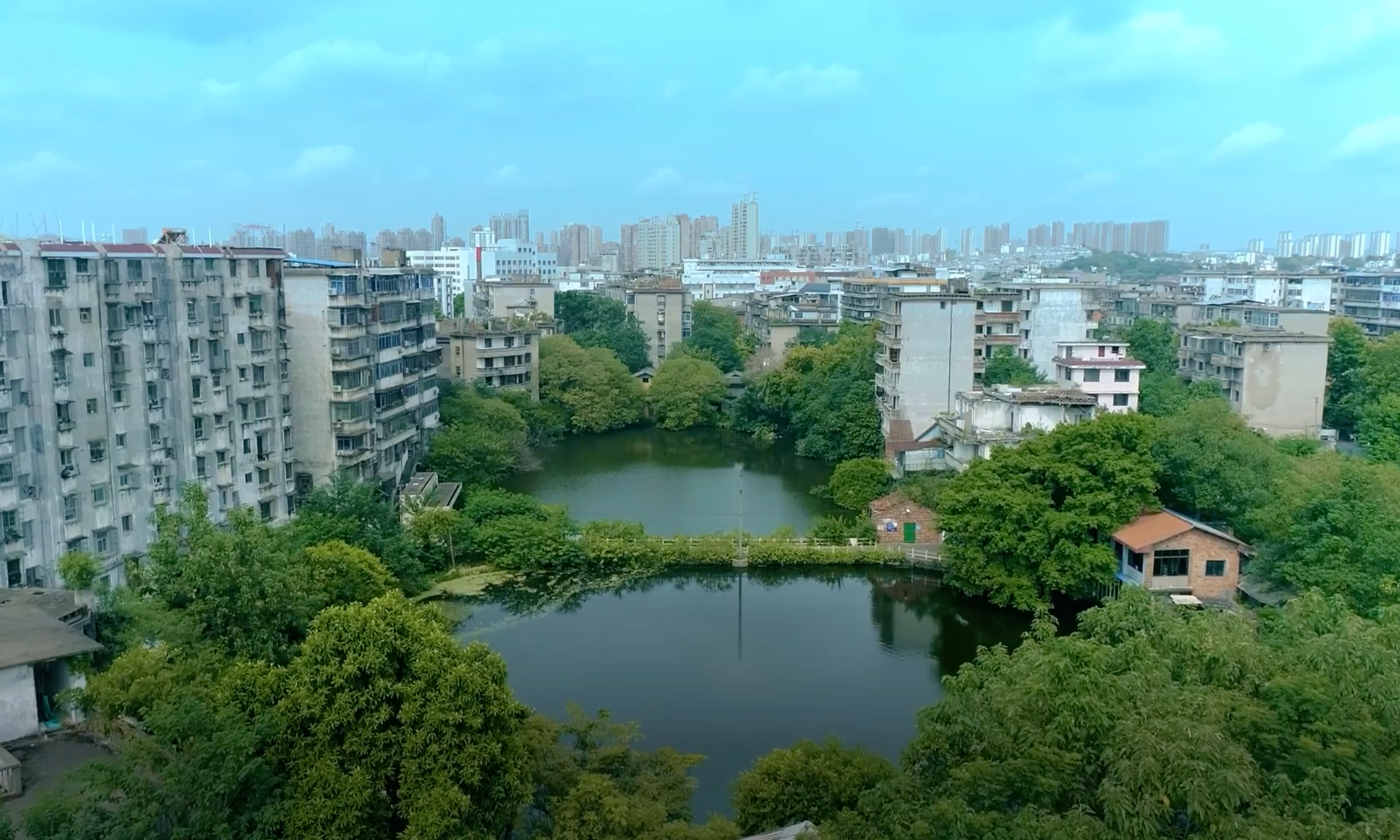
Complementing the underground drainage network was a system of interconnected ponds located within and around the city. Historical accounts suggest that the system was linked to over one hundred ponds, forming a distributed storage network.

These ponds served multiple functions, including agricultural irrigation, aquaculture, and stormwater retention. Fish farming was commonly practiced, and nutrient-rich sediments accumulated in the ponds were reused in agriculture, forming a localized ecological cycle.

During heavy rainfall, the ponds acted as temporary storage basins, capturing excess runoff and reducing peak flows within the drainage system. Water could then be gradually released after storm events, helping to moderate downstream flood risks.

From a contemporary perspective, these ponds function similarly to decentralized stormwater detention and retention systems, which are widely used in modern sponge city designs. In addition to their hydraulic role, the ponds also supported microclimate regulation and aquatic ecosystems, demonstrating how water infrastructure can simultaneously deliver environmental and social benefits.

Long-Term Performance and Resilience

Historical records indicate that by the late 1960s approximately 12.6 km of the Fushougou drainage network was still functioning and serving an estimated 100,000 residents in Ganzhou’s old urban district.

Rapid urban expansion during the twentieth century led to the loss of many original components of the system. Today, only about 1 km of the original drainage network, along with two ponds and two water windows, remain intact.

Despite this partial loss, the surviving elements of the system continue to illustrate the durability of its design. The longevity of the infrastructure highlights several characteristics that contributed to its resilience:

  • Gravity-driven drainage, eliminating reliance on mechanical pumps
  • High hydraulic capacity relative to the scale of the historic city
  • Self-cleansing flow velocities that reduce sediment accumulation
  • Distributed storage through ponds, which buffer peak stormwater flows
  • Integration with natural terrain gradients

Together, these features demonstrate how urban water infrastructure designed around natural hydrology and passive hydraulic processes can remain functional for centuries.

Lessons for Contemporary Urban Flood Management

Although the historical context of Fushougou differs from that of modern megacities, several design principles remain relevant for contemporary urban flood risk management.

1. Integrating natural and engineered infrastructure

The Fushougou system demonstrates how engineered drainage can be combined with natural landscape features such as ponds and terrain gradients. This hybrid approach aligns with current nature-based solution strategies, which seek to enhance the role of natural systems in urban water management.

2. Multifunctional water infrastructure

The system simultaneously supported stormwater drainage, wastewater conveyance, irrigation, and aquaculture. Such multifunctionality is increasingly recognized as an important characteristic of sustainable urban infrastructure, allowing water systems to deliver environmental, economic, and social benefits.

3. Passive hydraulic design

The water windows illustrate how simple hydraulic mechanisms, including pressure-responsive closures and flow-accelerating channel design, can provide reliable flood protection without energy inputs or complex mechanical systems.

4. Designing for longevity and maintainability

The steep gradients and self-cleansing flow conditions of the drainage network reduced sediment accumulation and maintenance demands. Designing systems that can maintain hydraulic performance with minimal intervention is an important consideration for long-term infrastructure sustainability.

Picture of Xiaoyan Yang

Xiaoyan Yang

Principal Project Officer (Natural Resources and Environment), Agriculture, Food, Nature, and Rural Development Sector Office,

Reproduced from Asian Development Blog.

ADB, Luli Wood Sign Green Loan to Advance Circular Economy in PRC’s Forestry Value Chain

BEIJING, PEOPLE’S REPUBLIC OF CHINA (4 December 2025) — The Asian Development Bank (ADB) and Shouguang Luli Wood Inc. (Luli Wood) have signed a $50 million green loan (about CNY353.63 million) to support the construction of an oriented strand board (OSB) factory, associated facilities, and a captive biomass power plant, as well as to finance working capital needs in Jiangxi Province, the People’s Republic of China (PRC).

“Climate stability and healthy natural ecosystems are fundamental global public goods, and this project is a tangible example of how the private sector can be catalyzed to actively safeguard them,” said ADB Country Director for PRC Asif Cheema. “By championing a circular bioeconomy, we are not only reducing emissions and preserving forests but also setting a new benchmark for the forestry sector—demonstrating that commercial viability and environmental stewardship are mutually reinforcing.”

The supply of wood and raw materials in the PRC faces significant challenges, with only 1% of forests certified as sustainably managed. This is compounded by the heavy reliance on imported wood, which accounts for over half of the PRC’s demand. The wood panel market is dominated by plywood, which typically depends on large timbers, encouraging the logging of old and natural forests and the inefficient use of trees.

Luli Wood’s OSB production addresses these challenges. OSB is an engineered wood panel that does not use old-growth timber. It uses wood waste—such as branches and twigs—and small trees sourced from smallholder farmers, with about 10% of the inputs being fast-growing and sustainable bamboo. The waste generated from the OSB production is used as fuel by a biomass power plant, which generates the electricity and steam required to operate the factory.

ADB’s financing is verified as a green loan by ERM, a second-party opinion provider, in accordance with the Green Loan Principles.

The project is expected to reduce greenhouse gas emissions by around 200,000 tons of carbon dioxide annually, create 1,500 jobs, and provide additional income for thousands of smallholder wood suppliers. The project also incorporates a gender action plan that will increase women’s inclusion across Luli Wood’s value chain, operations, and workplace.

“Partnering with ADB is a powerful endorsement of our vision,” said Luli Group Vice Chairman Xue Mingliang. “We have built a fully integrated, green supply chain—from sustainable forestry to finished homes—and are committed to setting a new standard for the industry. This collaboration is a pivotal step in our journey to becoming an international company in sustainable wood processing.”

Established in 2001, Luli Wood is a subsidiary of the diversified Luli Group and one of the largest OSB producers in the PRC. The company holds chain-of-custody certifications from both the Forest Stewardship Council (FSC) and the Programme for the Endorsement of Forest Certification (PEFC). These certifications ensure traceability and responsible sourcing from forest to finished product, validating that raw materials originate from certified forests or recycled materials. Luli Group is ranked among the top 500 private companies in the PRC.

ADB is a leading multilateral development bank supporting inclusive, resilient, and sustainable growth across Asia and the Pacific. Working with its members and partners to solve complex challenges together, ADB harnesses innovative financial tools and strategic partnerships to transform lives, build quality infrastructure, and safeguard our planet. Founded in 1966, ADB is owned by 69 members—50 from the region.

Reproduced from ADB.org

© 2026 Regional Knowledge Sharing Initiative. The views expressed on this website are those of the authors and presenters and do not necessarily reflect the views and policies of the Asian Development Bank (ADB), its Board of Governors, or the governments they represent. ADB does not guarantee the accuracy of the data in any documents and materials posted on this website and accepts no responsibility for any consequence of their use. By making any designation of or reference to a particular territory or geographic area, or by using the term “country” in any documents posted on this website, ADB does not intend to make any judgments as to the legal or other status of any territory or area.